
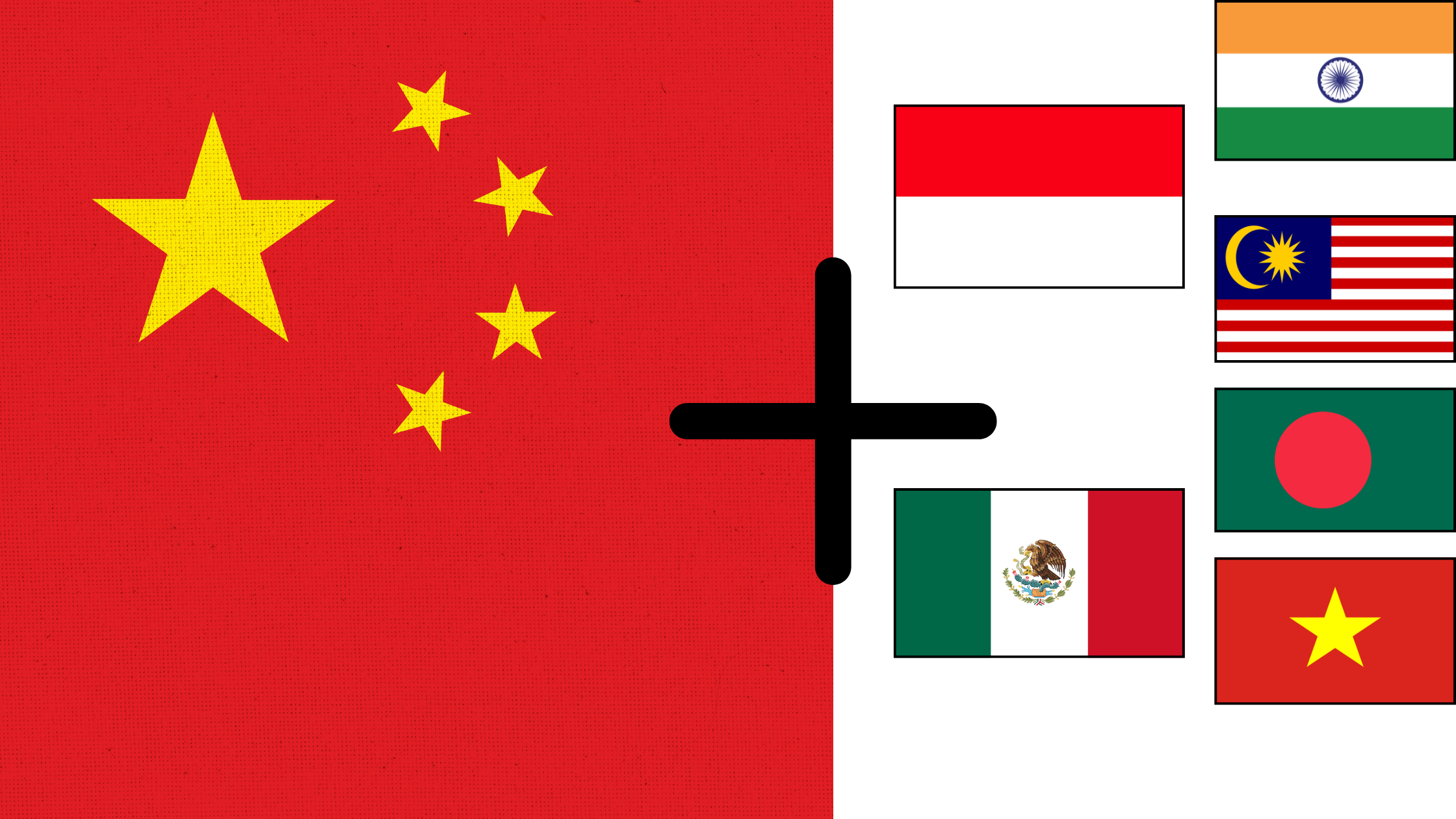
Way too many companies that I have been talking to are adopting a China Plus One diversification strategy, which means they have added one country or one supplier outside of China and assumed that they have reduced their risk of supply chain disruption. They haven’t. They’ve merely changed geography, but not exposure.
Building a Diverse Supply Base
Procurement needs to own supplier diversification with intent. Building a diverse supply base that keeps moving even when tariffs shift, trade routes tighten, or critical inputs become squeezed takes more than having a backup country to source from.
China’s share of US imports has fallen significantly as companies diversified production, but many of those same companies now face fresh tariffs and new regional dependencies elsewhere. At the same time, governments are actively investing in critical minerals and energy resilience to reduce concentration risk in supply chains. But what does all of this mean?
China Plus One Is Not a Miracle Cure
This is exactly why procurement must be treated as the owner of external value and risk, not just cost. Companies with an understanding of the true complexity of procurement know that they are not simply relocating spend. They are redesigning their sourcing portfolios.
Most China Plus One strategies fail because they miss at least one of three blind spots:
- Companies shift volume but not dependence. A supplier may be in a different country, but if its critical inputs still come from China, the exposure hasn’t changed. Procurement teams need to map key inputs and consider where the real concentration risk sits, not just where final assembly happens.
- Companies diversify countries but not relationships. They swap one low-cost location for another and keep the same transactional model. That does not create resilience. It creates another fragile arrangement in a different place. Strategic suppliers should be treated as resilience partners, with shared planning, clearer visibility, and deeper collaboration. That is also where procurement starts creating value, not just avoiding risk.
- Companies treat resilience as a one-time project instead of an ongoing strategy. Risk has to be reviewed, challenged, and rebalanced continuously as market conditions change.
What Procurement Should Do Now
Begin with the categories that matter most. Identify the products, materials, or suppliers that have the greatest impact on revenue, continuity, or customer trust. Then map where the real vulnerability sits – by supplier, country, and critical input.
Next, segment those categories by resilience posture:
- Protect – Identify categories where disruption would damage revenue, margin, or brand, then build multiregional sourcing and deeper supplier partnerships.
- Adapt – Identify categories where alternatives, substitutions, or route changes are possible, then create playbooks for switching inputs, routes, or suppliers quickly.
- Exploit – Identify categories where a stronger supply position could present a commercial advantage, then work with commercial teams to turn supply reliability into a competitive edge.
You can’t stop there, though. You must put numbers around the risk. Boards and CFOs do not respond to vague language about volatility. They respond to quantified exposure. How much volume is tied to one country? How long can the business operate if a critical supplier fails? How much revenue is exposed if one region becomes unavailable for 30 days?
Redefine Procurement’s Role
If procurement is still measured by savings alone, it will keep getting pulled back into short-term decisions that weaken long-term resilience. Leadership needs to align on what matters: cost, of course; but also continuity, optionality, and the ability to absorb disruption without stalling the business.
China Plus One might have once been a smart starting point. It is not enough now. Procurement has to design a sourcing portfolio that can take a hit, recover quickly, and still create value. That is the work. And as we head into 2027, it is one of the clearest ways procurement can prove it belongs at the center of business strategy.